
Conflict-Free and Ethical Diamonds: What to Look For

Almost every jeweler now advertises "conflict-free" diamonds, which sounds reassuring until you learn how little the phrase actually guarantees. If you care about where your diamond came from — and many buyers rightly do — you need to know what the labels mean, what they don't, and how to actually buy with a clear conscience. Here's the honest guide.
What "conflict-free" really means
The term comes from the Kimberley Process, an international scheme created to stop "blood diamonds" — stones sold to fund armed conflict — from entering the market. It has reduced that specific trade. But it has real gaps: it only addresses diamonds that fund war, not stones linked to labor abuses, environmental damage, or smuggling between countries. So "conflict-free" can be technically true while telling you almost nothing about working conditions or the wider supply chain. Treat it as a floor, not a guarantee.
How to actually verify ethics
Go beyond the label by asking the seller specific questions: Can they trace the diamond to its country or mine of origin? Do they work with certifications that cover labor and environmental standards, not just conflict? Can they show a full chain-of-custody? A serious ethical jeweler will answer readily and in detail; a vague "all our diamonds are conflict-free" with no specifics is a sign they don't actually know. An ethical diamond ring from a transparent seller comes with a real origin story, not a marketing slogan.
The lab-grown shortcut
The simplest way to sidestep the entire sourcing question is a lab-grown diamond. It's a real diamond — chemically and physically identical — created in a controlled facility, with no mining, no war-funding risk, and a far smaller environmental footprint (especially when grown using renewable energy). It also costs significantly less than a mined diamond of the same size and quality. For many ethically-minded buyers, a lab grown diamond ring is the clearest-conscience option available, and you get a bigger stone for the budget too.
Recycled and vintage diamonds
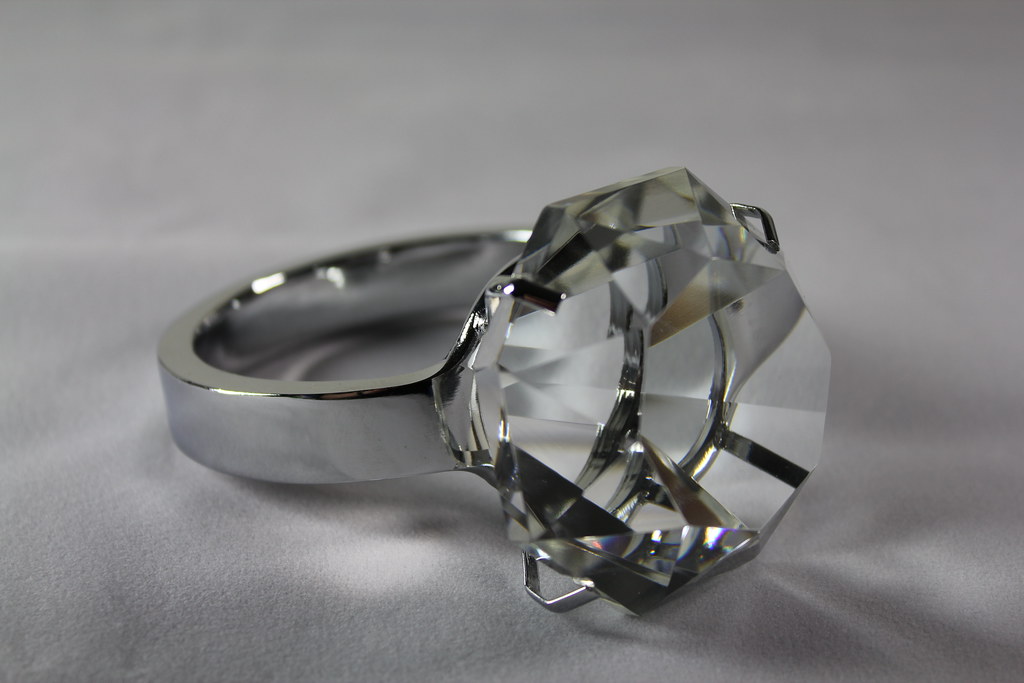
Another genuinely ethical route is a recycled or estate diamond — a stone already mined years or decades ago, re-cut or reset into new jewelry. No new mining occurs, the stone often costs less than new, and there's a certain romance to a diamond with history. Reputable estate jewelers and recycled-diamond specialists make this easy. A vintage stone in a modern ring setting gives you ethics, value, and character at once.
Get it in writing
Whatever route you choose, get the seller's ethical claims documented — on the receipt or certificate, not just spoken. For lab-grown, the grading report should state it's laboratory-created. For mined stones, ask for the origin documentation and any standards certification. Honest sellers put their claims in writing because they can back them up; the ones who can't will keep it vague. Store the paperwork with the piece and a good jewelry box to protect both.
What I'd skip
Skip treating "conflict-free" as proof of an ethical supply chain — it only addresses war funding. Skip sellers who can't give you any origin detail beyond the slogan. Skip assuming lab-grown is "fake" — it's a real diamond with a far cleaner story. And skip paying mined-diamond prices for a stone whose ethics the seller can't actually substantiate.
The honest answer
If buying ethically matters to you, "conflict-free" alone isn't enough — push for real traceability. The easiest clear-conscience choices are a lab-grown or a recycled/vintage diamond, both of which also save you money. If you want a newly-mined stone, buy only from a seller who can document where it came from and how it was handled. Transparency, in writing, is the whole game.
Ready to shop? Compare ethical diamond ring across stores →
