

How to Control Hunger While Dieting (So You Actually Stick to It)

You can be the most determined dieter alive, follow your plan to the letter, and still fail — because the moment intense hunger hits, willpower stops being the deciding factor. Hunger is biology, not weakness, and when it spikes, the odds of sticking to any eating plan drop sharply. That's why the real secret to a sustainable diet isn't more discipline; it's managing hunger so you're rarely fighting it in the first place. Get hunger under control and the whole thing gets dramatically easier. Here are the techniques that work. (As always, check with your doctor before any major diet change, especially if you have a health condition.)
Keep carbohydrates moderate
Of the three macronutrients — protein, fat, and carbohydrate — carbohydrates spike appetite the most, especially the fast-digesting kind. You don't need to eliminate carbs (that's its own extreme), but keeping them moderate, and pairing any carbs you eat with protein, blunts the blood-sugar roller coaster that sends you back to the pantry half an hour after a meal. The trick is choosing slow-digesting carbs — vegetables, legumes, whole grains — over refined ones like white bread, sugary snacks, and soda, which burn fast and leave you hungry again quickly.
Eat regularly — don't skip meals
It sounds backwards, but skipping meals to "save calories" usually backfires. Long gaps between meals crash your blood sugar, and low blood sugar is one of the biggest drivers of hunger — by the time you finally eat, you're ravenous and overeat. Eating at regular intervals keeps blood sugar stable and hunger manageable, so you make calmer food choices. Whether that's three solid meals or several smaller ones, consistency is what keeps the hunger spikes away.
Prioritize protein
Protein is the most filling macronutrient by a wide margin. It digests slowly, keeps blood sugar steady for longer, and triggers the hormones that tell your brain you're satisfied. Building each meal around a lean protein — chicken, fish, eggs, beans, Greek yogurt — keeps you fuller on fewer calories than a carb-heavy meal of the same size. Many people find adding a protein powder to breakfast or a post-workout shake is an easy way to hit enough protein to stay full through the morning. As a bonus, adequate protein protects muscle while you lose fat.
Fill up on fiber
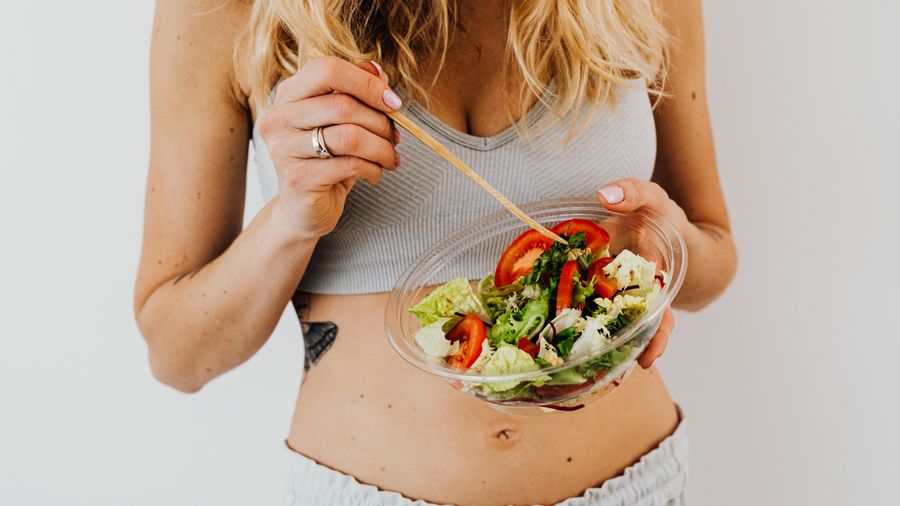
Fiber is a dieter's best friend because it adds bulk and slows digestion without adding many calories — it physically fills the stomach and keeps you satisfied. Vegetables, fruits, legumes, and whole grains are loaded with it. A big leafy salad before a meal, or vegetables making up half your plate, takes the edge off hunger for very few calories. If you struggle to get enough, a fiber supplement can help bridge the gap, though whole foods are always the better source.

Drink water — and drink it before meals
Thirst is regularly mistaken for hunger, so many "hunger pangs" are really mild dehydration. Water has no calories and is naturally filling. Drinking a glass right before a meal physically takes up stomach space, leaving less room for food and helping you eat less without feeling deprived. Swapping calorie-loaded drinks — soda, sweetened tea, even fruit juice — for water removes a huge source of hidden calories at the same time. Keep a large water bottle with you and sip through the day; staying hydrated quietly suppresses a lot of false hunger.
Don't underestimate sleep and stress
Two non-food factors drive hunger more than people realize. Poor sleep throws your hunger hormones out of balance — too little sleep raises the hormone that makes you hungry and lowers the one that signals fullness, so a tired person is a hungrier person. Stress does something similar, driving cravings for high-calorie comfort food. Protecting your sleep and managing stress aren't side issues for hunger control — they're central. Fix these and you remove two powerful triggers before they ever reach your stomach.
Slow down and use smaller plates
It takes about twenty minutes for your brain to register that your stomach is full, so eating fast means overeating before the "I'm satisfied" signal arrives. Slow down, chew properly, and put the fork down between bites, and you'll feel full on less. Serving meals on smaller plates uses a simple visual trick — a normal portion looks generous on a small plate and skimpy on a large one — that helps you feel satisfied with less food. Small behavioural tweaks like these reduce hunger's grip without any deprivation at all.
Keep smart snacks within reach
Hunger often wins not because your plan is wrong but because, in the moment, the only thing within arm's reach is junk. Beat that by stocking and pre-portioning filling, low-calorie snacks before hunger strikes: a hard-boiled egg, Greek yogurt, a piece of fruit, cut vegetables with hummus, or a small handful of mixed nuts. The combination to aim for is protein plus fiber, which together keep you full far longer than a sugary snack that spikes and crashes. Portion snacks into small containers in advance so you reach for a measured handful, not the whole bag. Having the right thing ready turns a hunger emergency into a non-event — you eat something genuinely satisfying, the craving passes, and your overall plan stays intact. The willpower you save for the moments that really need it.
What I'd skip
Skip skipping meals — it crashes blood sugar and makes you ravenous later. Skip cutting carbs to zero; moderate beats extreme and is far easier to sustain. Skip drinking your calories. And skip blaming weak willpower when the real problem is unmanaged hunger, poor sleep, or stress — fix those and willpower has far less heavy lifting to do.
The honest answer
A diet survives or dies on hunger, not willpower. Keep carbs moderate and paired with protein, eat regularly, build meals around protein and fiber, drink water before meals, protect your sleep, manage stress, and slow down when you eat. Stack these and hunger stops being the enemy that derails you — which means sticking to a healthy way of eating becomes something you can actually do for the long haul, not just a two-week test of grit.
Ready to shop? Compare large water bottle across stores → 📚 Or browse health & wellness programs in Digital Goods →