The Plants That Actually Bring Butterflies to My Garden
For two summers I planted what the labels told me butterflies loved and got almost nothing. A few cabbage whites, the odd passing skipper, and a lot of flowers nobody visited. The breakthrough wasn't buying more plants. It was figuring out which flowers actually feed butterflies in my particular patch of the world, and accepting that "pollinator-friendly" on a plant tag means almost nothing on its own.
Butterflies want nectar, not pollen, and they want it from flowers shaped so their long tongues can reach in. Once I stopped buying pretty things and started buying nectar machines, my borders changed completely. Here's what worked, what didn't, and how I'd plant a butterfly border from scratch today.
Start with what flies in your area, not a generic list
The single most useful thing I did cost nothing. I bought a cheap butterfly identification guide and spent a couple of evenings actually watching what came through the garden. Turns out my visitors were specific: lots of fritillaries and skippers, a few admirals, almost none of the showy species the magazines feature. Knowing my actual residents meant I could plant for them instead of for a photo on a seed packet.
Different butterflies favor different nectar sources, and the species in your county may be nothing like the ones two states over. So before I ordered a single plant, I wrote down what my local butterflies were feeding on and built the list from there. A field guide and a notebook beat any "top 10 butterfly plants" article, including this one, for your specific garden. If you only do one thing, do the watching first. A pair of bird watching binoculars makes the IDs a lot easier from a garden chair.

The nectar plants that earn their space
Here's the honest performance review. My most reliable magnet is summer lilac (buddleia), which isn't called the butterfly bush for nothing. On a warm afternoon it can hold a dozen butterflies at once. Purple coneflower is the workhorse of the border, blooming for weeks and feeding everything. Lavender pulls in the smaller species and smells incredible while doing it. Daisies, yarrow and Verbena bonariensis all pull their weight, with verbena being a particular winner because butterflies can perch on its tall stems and feed in the open.
For the milkweed family, I'll say plainly: if monarchs pass through your region, plant it, because their caterpillars eat nothing else. Day lilies, valerian and yellow sage round out my list. What disappointed me? A lot of heavily bred, double-flowered ornamentals that look spectacular but have been bred until the nectar is gone or unreachable. Pretty for me, useless for butterflies. I now buy the simpler, single-flowered species and varieties on purpose. A bag of mixed perennial flower seeds of these proven types costs less than a few nursery pots and covers far more ground. Drop a few butterfly nectar feeder stations between the flowers and you extend the buffet into the gaps between bloom times.
Plant for the whole season, not one big flush
My early borders made a rookie mistake: everything bloomed in July, then nothing. Butterflies are around from spring well into autumn, and a garden that only feeds them for three weeks is a garden they mostly skip. Now I deliberately stagger bloom times so there's nectar from the first warm days through the last.
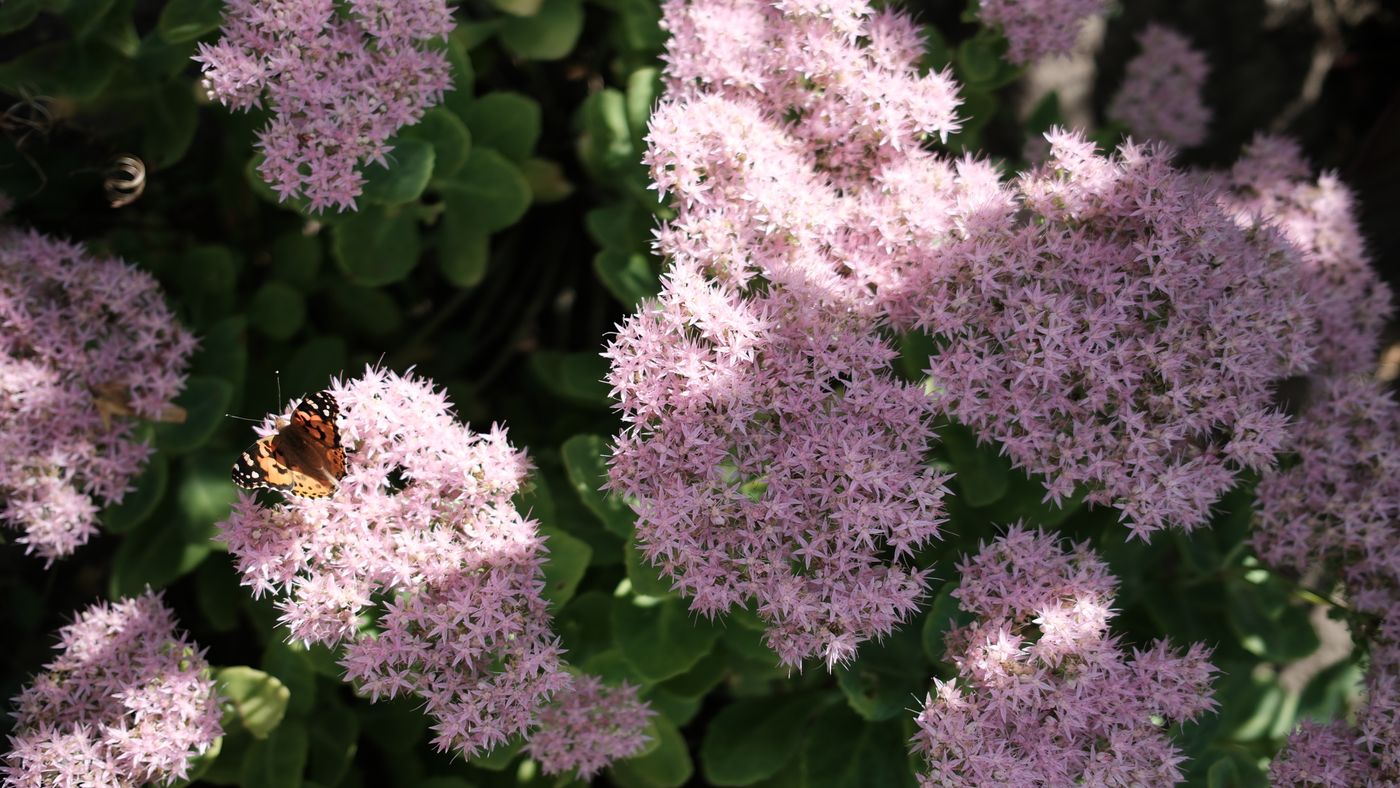
I group early bloomers, midsummer powerhouses and late-season flowers like asters and sedum so something is always open. The late stuff matters more than people think. Butterflies fueling up before winter will work a patch of asters hard when little else is left. I plant in generous drifts of the same flower rather than one of everything, because a big block of color is far easier for a passing butterfly to spot and commit to than a scattered single plant. A few good garden planters of staggered annuals let me plug nectar gaps wherever a bed goes quiet.

Colour, grouping and a few honest trade-offs
Butterflies genuinely do respond to colour, and I lean into it. Warm reds and oranges read as flashy and showy, and they pop hardest against a strong green backdrop. Cool blues and purples are calmer and look fresh next to white. I plant in blocks of colour rather than a confetti of singles, both because it looks more deliberate and because a mass of one bloom is a bigger landing target.
The trade-off I've made my peace with: a true butterfly border is not a tidy, manicured thing. It wants single flowers over fancy doubles, it wants some plants left to go to seed, and it looks a little loose and cottagey rather than crisp. If you want both, split the difference like I do, with a structured front edge and a wilder, nectar-rich middle. A good garden hand trowel and a bag of organic compost soil to keep the nectar plants vigorous are the only other things you need. Watch for a season, plant what your butterflies actually feed on, stretch the bloom across the year, and they'll find you.
Ready to shop? Compare garden hand trowel across stores → 📚 Or browse home & garden guides in Digital Goods →