

The Fat-Loss Foods I Actually Want to Eat

The phrase "fat-burning food" is mostly marketing. No food burns fat directly. But some foods make losing fat dramatically easier by keeping you full, stabilising blood sugar, and providing nutrition that keeps cravings manageable. Here's what actually earns a place in my kitchen on that basis.
Lean protein: the macro that does the most work
Protein is absorbed more slowly than carbohydrates or fat, which means it keeps blood glucose stable and keeps you full for longer after eating. It also has a higher thermic effect — your body burns more calories processing protein than processing the same calories from carbs or fat. And it's the raw material for maintaining muscle mass when you're in a calorie deficit.
Chicken breast, turkey, fish, egg whites, Greek yogurt, cottage cheese — these are the sources I cycle through. I use a food scale to portion them accurately. Not obsessively, but because I spent a year eating what I thought was 150g of chicken and was routinely getting 90g.
Dark leafy greens
Spinach, kale, broccoli, romaine, collard greens — these have the best nutritional density to calorie ratio of almost any food category. They provide slow-absorbing carbohydrates (the kind that don't spike blood sugar), meaningful vitamins and minerals, and substantial volume that fills your stomach without filling your calorie budget. A large bowl of spinach and broccoli with a protein source is a genuinely satiating meal that costs fewer calories than a small bag of crisps.
If you find plain greens unpleasant, the preparation matters more than the greens themselves. Roasted broccoli with a little olive oil tastes entirely different from steamed broccoli. Experiment with cooking methods before concluding you dislike a vegetable.
Nuts and seeds
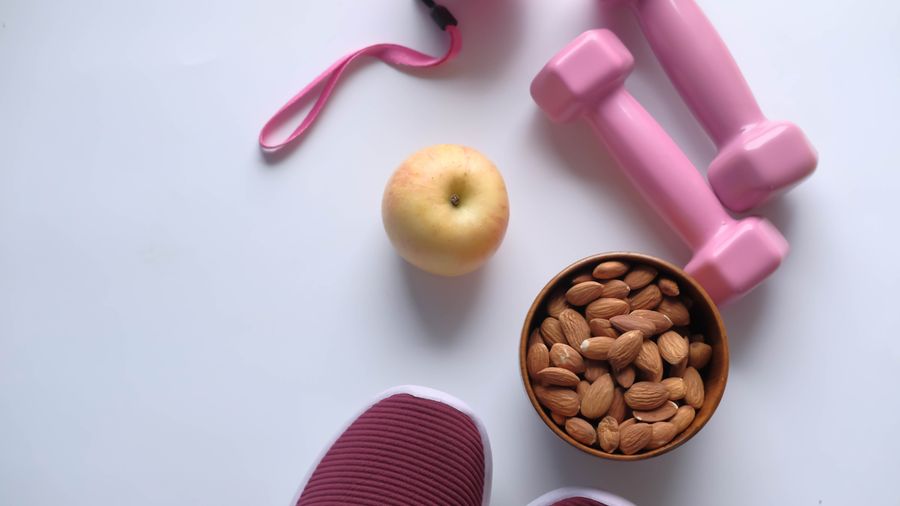
Nuts look problematic on a diet because they're calorie-dense. But the fats they contain — polyunsaturated and monounsaturated — are genuinely good for metabolic health and cardiovascular function. And because they're calorically dense, a small handful is genuinely satiating as an afternoon snack in a way that crackers aren't.
The important thing is portioning. A handful of almonds from a bag left open on your desk becomes three handfuls before you notice. A pre-portioned bag or a food scale snack container keeps this honest.
Water — the most underused tool in fat loss
Not a food, but the most important item on this list. Water fills your stomach with zero calories. Drinking a large glass before each meal consistently reduces portion size at that meal. It prevents the dehydration that masquerades as hunger. And it replaces drinks — juice, soda, sweetened coffee — that contribute hundreds of daily calories without any satiation.
A 1.5-litre water bottle visible on my desk is a simple reminder to drink through the day. Without it I reliably forget.
What the research actually says about "fat-burning" supplements
Most supplements marketed for fat loss have thin or non-existent evidence. Green tea extract, when taken as a supplement, shows modest effects on metabolic rate. Caffeine genuinely increases fat oxidation during exercise. Everything else — raspberry ketones, garcinia cambogia, CLA — has either poor evidence or evidence that doesn't survive replication.
Save the money. Put it toward better food, a food scale, or quality protein powder for days when protein targets are hard to hit through whole foods.
What I'd skip
Low-fat versions of foods. When manufacturers remove fat, they usually add sugar or thickeners to maintain palatability. The low-fat yogurt often has more sugar than the full-fat version and is less satiating. Check the label and choose the version with fewer ingredients and less added sugar, regardless of fat content.
**Bottom line:** The foods that support fat loss are the foods that keep you full, keep blood sugar stable, and provide protein for muscle maintenance. They're also mostly delicious when prepared well. The issue is rarely the food itself — it's the portion and the preparation.
Ready to shop? Compare Fitness across stores → 📚 Or browse fitness programs & plans in Digital Goods →

