

Five Ab Exercises That Actually Hit Your Core (Not Just Crunch the Same Spot)
I spent two years doing the same three crunch variations and wondering why my core looked exactly the same. The switch that made the real difference wasn't working harder — it was picking moves that challenge more than one layer of muscle at once.
Why most ab routines miss the point
The rectus abdominis — the "six-pack" muscle — sits on top. Underneath it are the obliques and the deeper transverse abdominis, the one that actually cinches your midsection. A routine built entirely on standard crunches hits the top layer and largely ignores everything below it. You end up with a stronger crunch but no real change in how the midsection looks or performs under load.
The fix is straightforward: use exercises that force your whole trunk to stabilise, not just flex. Five moves cover this reliably if you cycle them into your training three times a week. None of them require a machine.
The five moves and why each earns its place
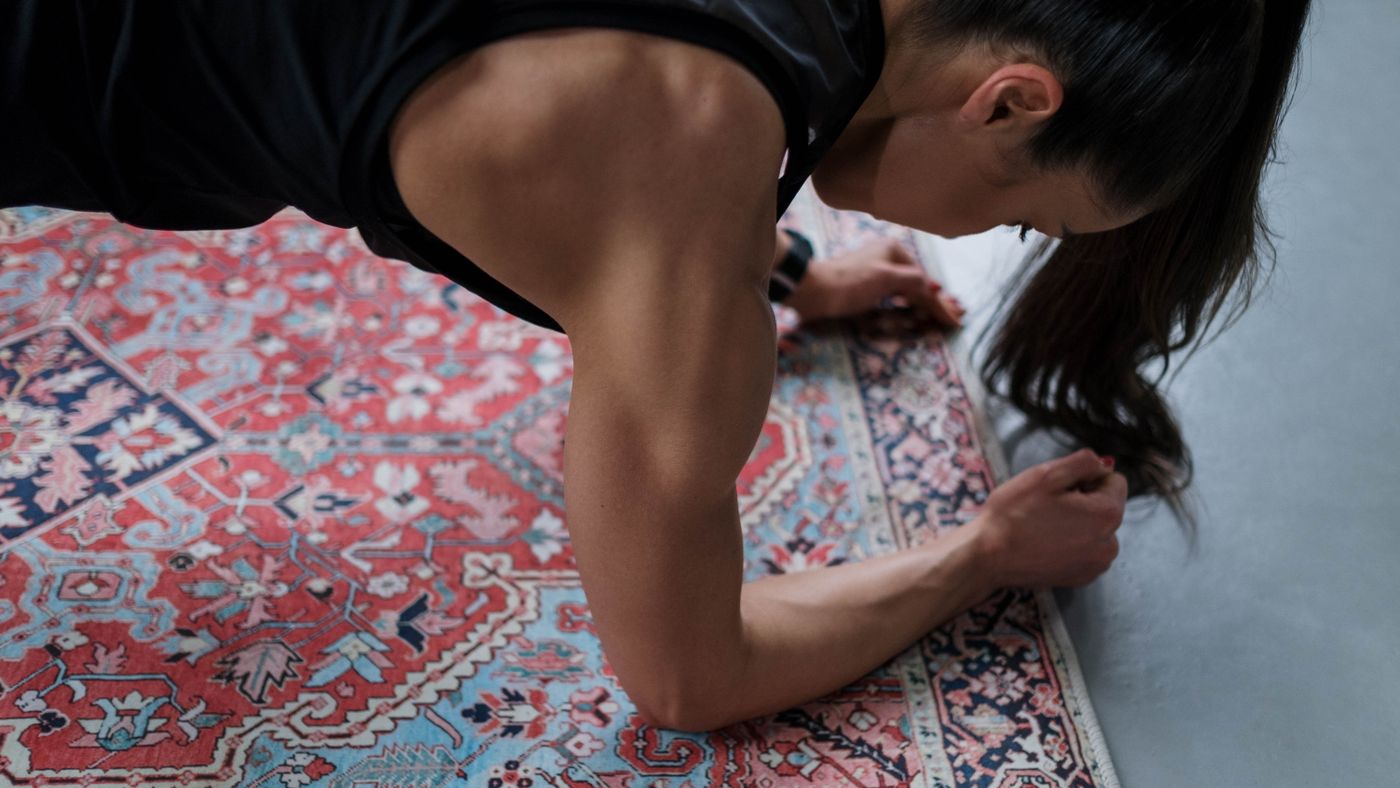
**Plank.** Get onto your forearms, feet hip-width, body in a straight line from head to heels. Hold for 30–60 seconds. The plank recruits deep stabilisers that crunches don't touch, and it protects the lower back rather than straining it. An exercise mat makes a noticeable difference on hard floors — after about two weeks on bare tile my elbows started complaining.
**Stability ball crunch.** Drape your lower back over a stability ball so your spine has a full range of motion. The unstable surface forces your core to fire harder just to keep you balanced, and the extension at the bottom is a range you never get lying flat. Twelve reps here are worth more than 30 on the floor.

**Lying leg raise.** Lie flat, arms at your sides, and lift both legs to 90 degrees — slowly. Lower them until they're just above the floor, pause, repeat. Don't let your lower back arch off the mat. This one specifically hammers the lower abs, which is where most people carry stubborn fat and where standard crunches contribute almost nothing.
**Bicycle crunch.** Hands behind your head, legs in the air, and alternate bringing each knee toward the opposite elbow while extending the other leg. Go deliberately — speed is the enemy here. Rushing this just swings you through the movement without actually contracting the obliques.
**Accordion sit-up.** Start lying flat, then simultaneously bring your knees and upper body toward each other so you fold in the middle. It looks a little awkward the first few times. The value is the full-range contraction: you're working both the upper and lower portions in one movement rather than isolating either end.
Building these into a realistic schedule
Three days a week is enough, with at least one rest day between sessions. Each session: two rounds of all five exercises with 60 seconds rest between rounds. The whole thing takes under 20 minutes. If you want to load it further, a resistance band looped around the feet during leg raises adds resistance without any equipment investment.
Tracking is useful. A simple fitness journal — even a notes app — tells you whether your plank hold is actually improving week over week. When I started I could hold 25 seconds. After eight weeks I hit 90 seconds without shaking. That measurable progress is what keeps you coming back.

For the bicycle and accordion moves I'd suggest counting by feel rather than by timer. Reps done well beat reps done fast, every time.
What I'd skip
Ab rollers look impressive and they do work, but they place a lot of torque on the lower back if your core isn't already well-developed. I'd skip them for the first couple of months. Electronic ab stimulators are a waste of money — the literature on them is very thin. A good exercise mat and 20 minutes beats any gadget claiming to do the work for you.
**Bottom line:** These five exercises give you genuine full-core training without a gym membership or complicated equipment. Do them consistently, keep the reps clean, and you'll feel a real difference in stability and appearance within six to eight weeks — provided the diet is reasonable. No amount of core work overrides a calorie surplus.
Ready to shop? Compare Fitness across stores → 📚 Or browse fitness programs & plans in Digital Goods →

